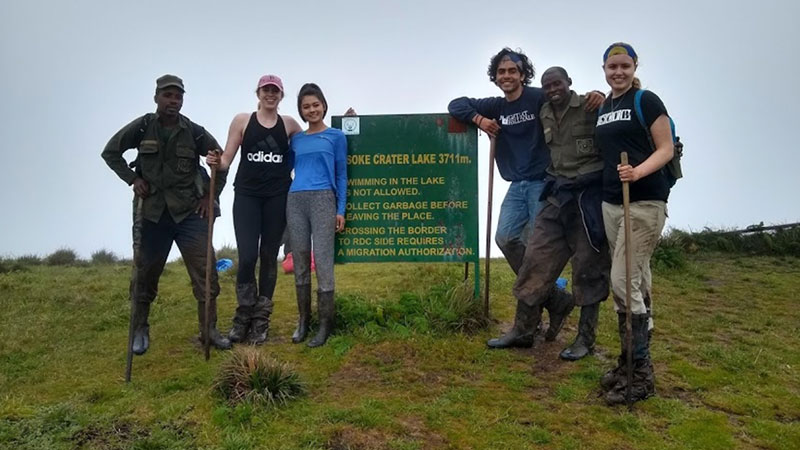
Mount Bisoke Crater Hike
Mount Bisoke Crater Hike, the elevation of Mountain Bisoke is 3,711 meters, and this volcano is situated on the boundary between Rwanda and the Democratic Republic of Congo. Mountain Bisoke is a dormant volcano featuring a substantial crater lake at its top, measuring approximately 400 meters in diameter, located on the Rwandan side. This mountain is a prominent location for hikers.
Mountain Bisoke presents a moderate challenge for hikers, while remains accessible for novices. Bisoke Mountain hosts a substantial population of mountain gorillas, providing opportunities for encounters on hikes.
Encountering golden monkeys is nearly assured. Upon reaching the summit of the mountain, the vista of Crater Lake is awe-inspiring and very gratifying. The picturesque vistas of Rwanda’s undulating terrain are remarkable. The summit of Mikeno Mountain in the DRC is also visible. This hike may require up to 4 hours for ascent and approximately 2 hours for descent.
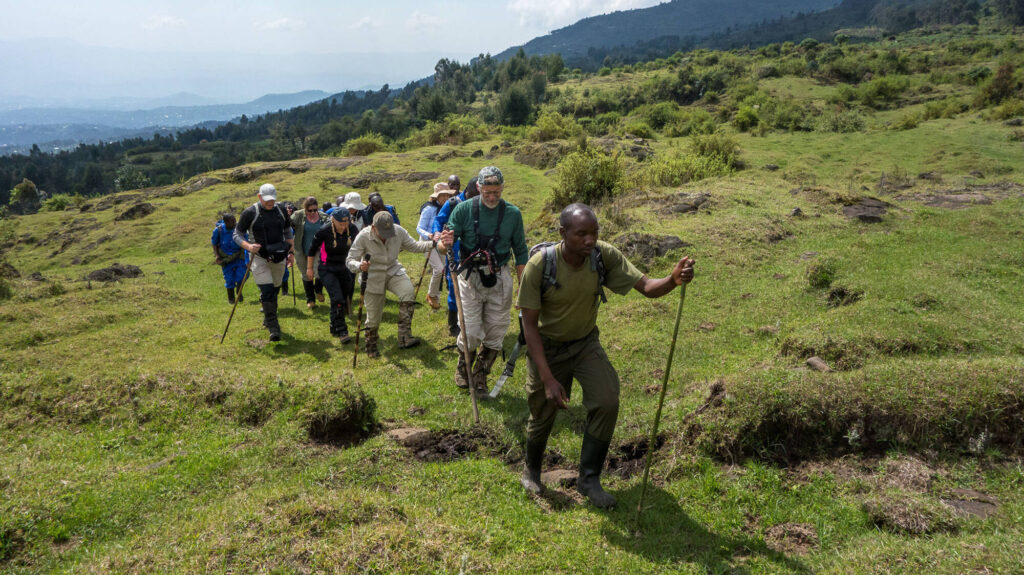
Climb Mount Bisoke:
This hike involves ascending Mt. Bisoke to reach the Crater Lake summit.
The initial elevation is 2700 meters above sea level.
The minimum group size is one individual.
Certified tour guide and four-wheel-drive tour vehicle
Porter service: $10 for transporting your backpack. Hiring a porter is advisable, regardless of the perceived lightness of your package. Oxygen becomes increasingly scarce, and the journey quickly becomes exhausting.
Vegetation zones fluctuate according to altitude. A little bamboo extends to 2800m, transitioning to Hagenia Hypericum from 2800m to 3200m, culminating in sub-alpine vegetation at the summit.
In addition to ascending Mount Karisimbi Volcano, travelers may also participate in the Mount Bisoke hike. This climb is occasionally called the “Crater Lake Hike” because to the renowned Crater Lake located at its peak. Mount Bisoke is one of the eight volcanoes comprising the enormous Virunga Massif, which extends over Uganda, Rwanda, and the Democratic Republic of Congo. The mountain is situated within two national parks: Volcanoes National Park in Rwanda, which contains the largest portion, and Virunga National Park in the DRC. Among the eight volcanoes, Mount Bisoke ranks as the fourth tallest, with an elevation of 12,180 feet (3,711 meters) above sea level. Mount Bisoke is located in Volcanoes National Park, approximately a three-hour drive from Kigali.
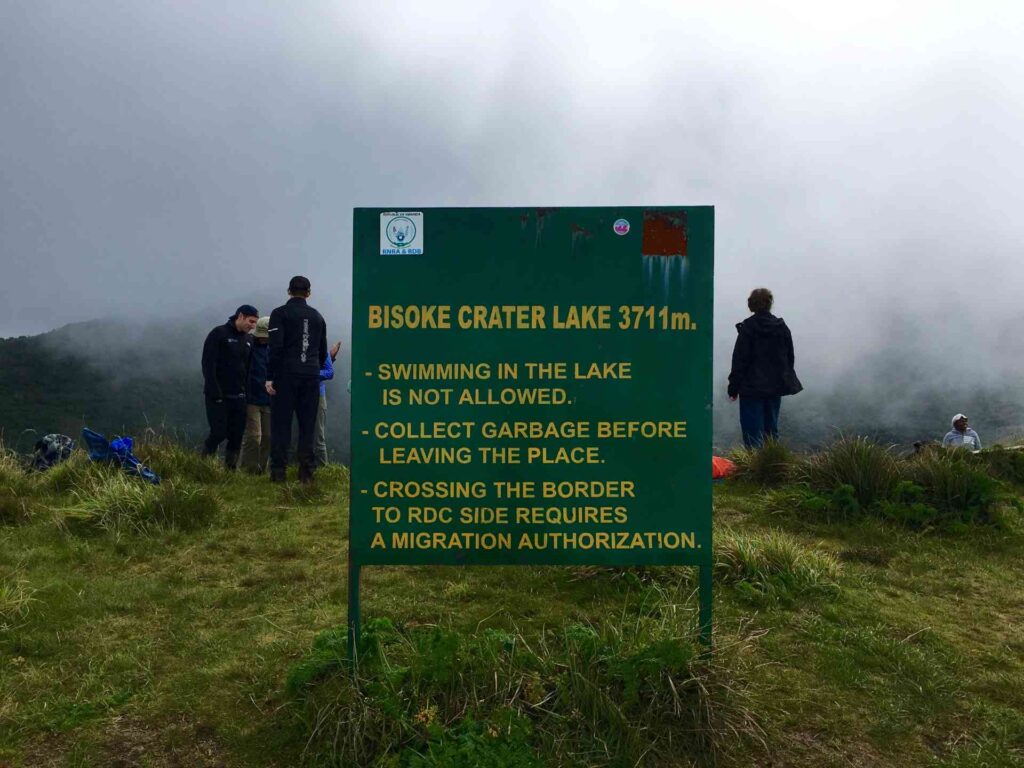
Owing to its elevation, this volcano is generally less tough to ascend than others like as Mount Karisimbi, Muhabura, and Mikeno. The ascent to the top and return typically requires one day, approximately 6 hours in total, comprising 4 hours for the ascent and 2 hours for the descent. The seasoned hikers require only 5 hours (3 hours up and 2 hours descending). Remarkably, even hikers lacking physical fitness may ascend it with ease. However, it is imperative to acknowledge the necessity of maintaining physical fitness. Fundamental physical fitness is all that is required. The hiking fee is $75 per person, comprising $50 for the guided excursion and $25 for park admission fees, minus the cost of hiring a porter.
Prior to engaging in the climb or trip, ensure you don robust, waterproof hiking footwear that provide adequate traction to facilitate ascent, particularly during the rainy season. A rain gear is useful because rainfall cannot be forecast in this tropical rainforest region at high altitude. Tourists are encouraged to use long trousers and long-sleeved shirts to save their arms and legs against abrasions caused by tree branches or weeds. Carrying snacks and water is essential to replenish energy expended throughout the trip. Although the activity is available year-round, travelers are encouraged to schedule it during the dry season when the trails are not muddy and slippery. The key advice for this exercise is to remain vigilant and observant, as you may encounter mountain gorillas.
Trekking Mount Bisoke: The Experience and Notable Features
Mount Bisoke, reaching an elevation of 3,711 meters (12,175 feet) and including a distinctive crater lake, is among Rwanda’s most accessible and gratifying hikes. It is an outstanding option for a demanding yet feasible day hike. Although it is a shorter hike than Mount Karisimbi, it provides stunning vistas, abundant biodiversity, and an exhilarating experience, rendering it a preferred choice for tourists visiting Volcanoes National Park.
An Overview of the Trail
The expedition to the apex of Mount Bisoke commences from the Volcanoes National Park headquarters in Kinigi. Upon check-in, climbers receive a briefing from park rangers, who accompany all groups for safety and conservation reasons. The trailhead is situated a little drive from the headquarters, and the climb spans roughly 6 to 7 kilometres (4 to 4.3 miles) one way, with an elevation increase of approximately 1,000 meters (3,280 feet).
The expedition commences in a lush montane forest, characterized by towering trees, heavy undergrowth, and intermittent mist, which collectively evoke a nearly ethereal ambiance. The forest is abundant with wildlife, and trekkers may observe golden monkeys, diverse avian species, and, with some fortune, even mountain gorillas. The melodies of avian calls and the whisper of foliage accompany climbers ascending the trail.
As the path elevates, the woodland shifts to bamboo thickets, rendering the terrain more precipitous and arduous. The volcanic soil and regular precipitation can render the trail muddy and treacherous, particularly following a deluge. Hikers must be equipped for areas necessitating scrambling over roots and rocks.
The concluding portion of the trek entails a difficult ascent to the peak, where the woodland progressively transitions to afro-alpine flora, featuring huge lobelias and Senecio species. The summit is frequently enveloped in mist, enhancing the feeling of achievement upon arrival at the peak.
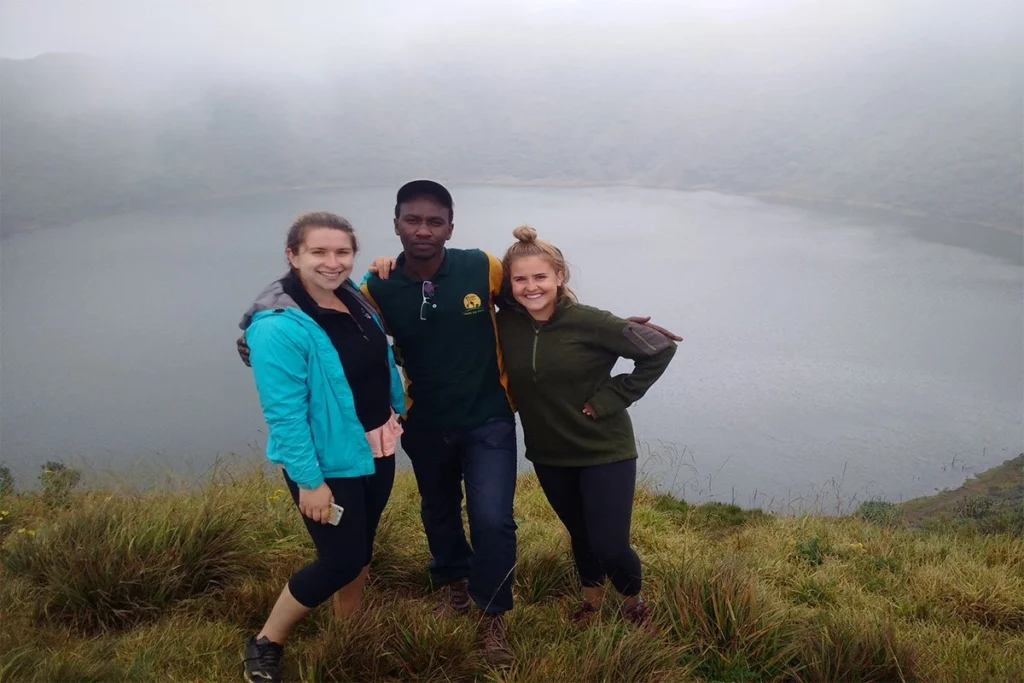
The Summit and Crater Lake
The pinnacle of the Mount Bisoke ascent is clearly the crater lake at the apex. The expansive, emerald-green lake, occupying the caldera of the inactive volcano, measures approximately 400 meters in circumference. The view of this serene pool of water, encircled by mist and the jagged crater walls, is both bizarre and breathtaking. On clear days, the vistas stretch well beyond the crater, revealing the adjacent Virunga Mountains and the remote terrain of neighboring Congo.
The top is an ideal location for repose, photography, and savoring a packed lunch before to commencing the descent. Climbers are cautioned against prolonged stays at the summit due to the elevated altitude and the potential for swiftly altering weather conditions.
Challenges of the Climb
The ascent to the peak of Mount Bisoke is characterized by steep and muddy trails, especially during the wet seasons. The steep gradients and treacherous areas can be physically taxing, even for seasoned hikers.
Erratic Meteorological Conditions: The Virunga region is recognized for its erratic weather patterns. Climbers may experience unexpected rain, fog, or strong winds during the dry season, which diminishes visibility and complicates the trail.
Altitude: While not as elevated as Mount Karisimbi, Mount Bisoke’s height may nevertheless induce minor altitude sickness in certain trekkers. It is essential to regulate your pace, maintain hydration, and heed your body’s signals throughout ascent.
What to Expect During the Descent
The descent from the summit typically requires 2 to 3 hours, however it can be equally arduous due to the treacherous terrain. Trekking poles are strongly advised for enhanced stability, particularly on steep, muddy terrains. The descent provides an additional chance to see the verdant landscape and observe species that may have been overlooked on the ascent.
Park rangers guarantee that all hikers honor the environment and comply with conservation regulations, which save the fragile ecosystems and the indigenous fauna of the mountain.
What are the reasons for selecting Mount Bisoke?
Mount Bisoke presents a distinctive combination of adventure, natural splendor, and accessibility. In contrast to the demanding multi-day expedition necessary for Mount Karisimbi, Bisoke can be accomplished in a single day, rendering it an ideal choice for individuals with limited time who nonetheless wish to feel the exhilaration of volcanic ascent. The closeness to the park headquarters, along with the breathtaking crater lake at the peak, renders Mount Bisoke an exemplary introduction to the marvels of the Virunga range.
Consequently, Mount Bisoke is a significant tourist attraction that visitors may include in their itinerary when traveling to Rwanda for gorilla tracking.